

Modern handicrafts
Modern handicrafts are actually a combination of old artistic structures with modern art. These works of art are mysterious and thought-provoking, and their display in an exciting way expresses the emotions of artists around the world. But what exactly is modern art? Where did it come from? And why do so many people like it?
Modern art emerged in the late 19th and early 20th centuries, characterized by a shift from traditional styles to a more abstract and experimental approach to creating artwork. Pablo Picasso, Wassail Kandinsky, Salvador Dali and Marcel Duchamp are among the influential modernist artists. Modern handicrafts have had a lasting impact on the development of visual culture and continue to influence contemporary art today.
Characteristics of modern crafts or modern art:
Using vibrant colors and coarse brushes
Abstract, expressive shapes and forms
Exploration of new concepts such as motion, time and space
Failure to accept or conflict with original values and traditional techniques
With the development of societies and the creation of the modern world, and the involvement of humans with new technologies, many modern handicrafts were created, one of which is sculpting with various types of paste.
Sculpting with dough may seem like a hobby that is mostly popular among children at first glance, but if we look more closely, we can see its popularity as a result of the desire of many people to make figures and faces.
Types of sculpting pastes
Clay sculpture is divided into five major types:
1. Paste with water base
2. Paste with oil base
3. Paste with ceramic base
4. Dough with paper base
5. Paste flower
Here we try to provide a brief description of each paste:
1- Sculpting paste with water base
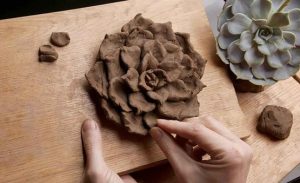
Water-based modeling clay Water-based modeling clay is often made from a mixture of clay and water, and is one of the most popular materials for modeling clay. The main reason for its popularity is its reasonable price, which is one of the popular options for beginners. Also, it has a very good hammer ability and is easier to work with.
Another reason for the popularity of water-based paste is its ability to dry quickly, which reduces work time; however, this feature can reduce the quality of work.
2- Sculpting paste with oil base

This paste is made from a combination of oil, wax and clay. Oil-based paste does not dry out, so it is used over and over again. For this reason, it is a great option for children’s toys.
Since the consistency of the oil is affected by the temperature, the malleability of the dough is dependent on the temperature. The warmer the dough, the easier it will be to work with. For convenience, the dough can be slightly heated to increase its temperature before use, especially if it is being utilized in colder spaces.
3-Ceramic sculpture dough
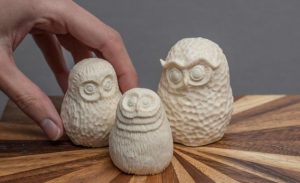
Ceramic sculpture paste is made from a combination of natural clay and added substances, such as powder and glaze. This paste turns into different types, among which kaolin paste and fire paste can be mentioned.
4-Paper pulp
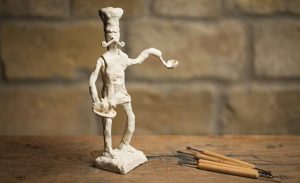
Paper pulp is a dough that has been added to clay in its making. You can buy paper pulp either ready-made and mixed, or make it by adding paper towels, newspaper, glue, etc. to the clay.
5- Pasty clay
What we know as sculpting paste is paste clay. Putty clay is basically a modeling compound that is used to create different shapes. This paste is soft and non-toxic, available in different colors and non-sticky shapes, and can be used over and over again.
Chinese paste is one of the most popular gels with a paste base that may be made of polyester or polymer. And one of the most important and best types of pastes for sculpting is air-dry polymer paste.
How to make a sculpture with dough?
In the following, we will share with you some key tips for sculpting with dough.
- Imagine, even if it’s hard to imagine!
It is true that you are at the beginning of the path, but try to have a clear picture of the final sculpture so that you can predict the path more accurately. For example, if you are making a 3D sculpture, imagining the angle from which the sculpture will be seen will help you a lot in the right direction.
- Act smart!
Be creative in creating forms. Take your steps slowly. For example, using prominent forms or building a figure at the beginning of the route is not a very interesting idea, and failing at it may demotivate you.
- Know key sculpting techniques
It is true that you are now sculpting with clay, but to learn sculpting with clay, it is better to learn the four basic principles of sculpting, i.e. carving, assembling, modeling and casting, so that you have a better understanding of sculpting.
Advantages and disadvantages of sculpting with dough
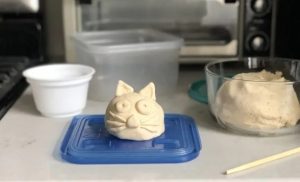
What we know from clay sculpture has bases based on wax and oil, which increases its flexibility. Sculpting with clay has grown popular in recent years due to its malleability, availability, and reusability.
Advantages of sculpting with dough
- It is non-toxic.
- It has a higher degree of safety
- It has many colors.
- It is easier to use and can be used multiple times.
- Its price is cheap
Disadvantages of sculpting with dough
- It has high adhesion
- If it is not used for a long time, it will harden.
- May leave traces and stains on surfaces.
Conclusion
Modern art is known for its aesthetics and individual imagination, and is known for its forward-thinking artists. Over 100 years of evolution, modern art includes various styles, some of which are very famous today.
Modern arts such as painting, sculpture, architecture and graphic arts are characteristic of the 20th and 21st centuries and a part of the 19th century. Modern art has accepted a variety of movements, theories and attitudes that modernism is particularly involved in the tendency to reject traditional, historical or academic forms and parameters in an effort to create an art more in line with creating changes in social, economic and intellectual conditions.